The Ernest Cook Trust, a charity and the original landowner and development lead for Fairford Leys looks back at the origins of Fairford Leys and how the community continues to inspire new development principles across the country.
As the Government today plans more new communities across the country to meet the target of building 1.5 million homes by the next election, Fairford Leys, on the outskirts of Aylesbury in Buckinghamshire, demonstrates how good placemaking stands the test of time.
The development, on Trust-owned land, provided a significant injection of funds into the charity. The Ernest Cook Trust works to give children and young people a deeper connection with the natural world, farming and the countryside, through the provision of outdoor learning experiences and improving access to nature.
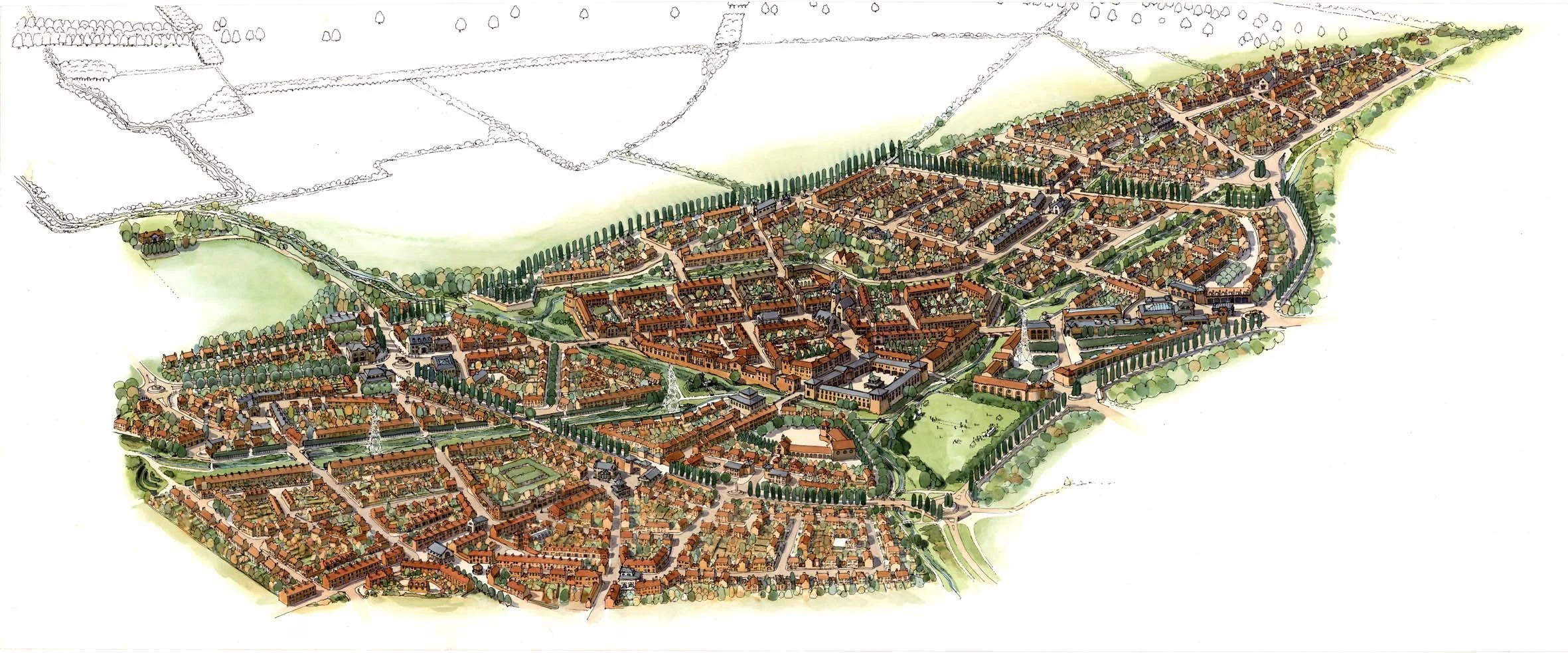
John Simpson Architects - Concept
Work began in the 1990s on the new community of almost 2,000 homes on land on the Hartwell Estate, bought in 1938 by philanthropist and founder of the charity, Ernest Cook. He was a passionate supporter of rural communities and worked to bring together people and land, helping both to thrive.
After an official launch in November 2004 the new community began to welcome residents and businesses in 2005. Renowned architects John Simpson and Partners drew up the master plan with the objective of fostering a spirit of local community.
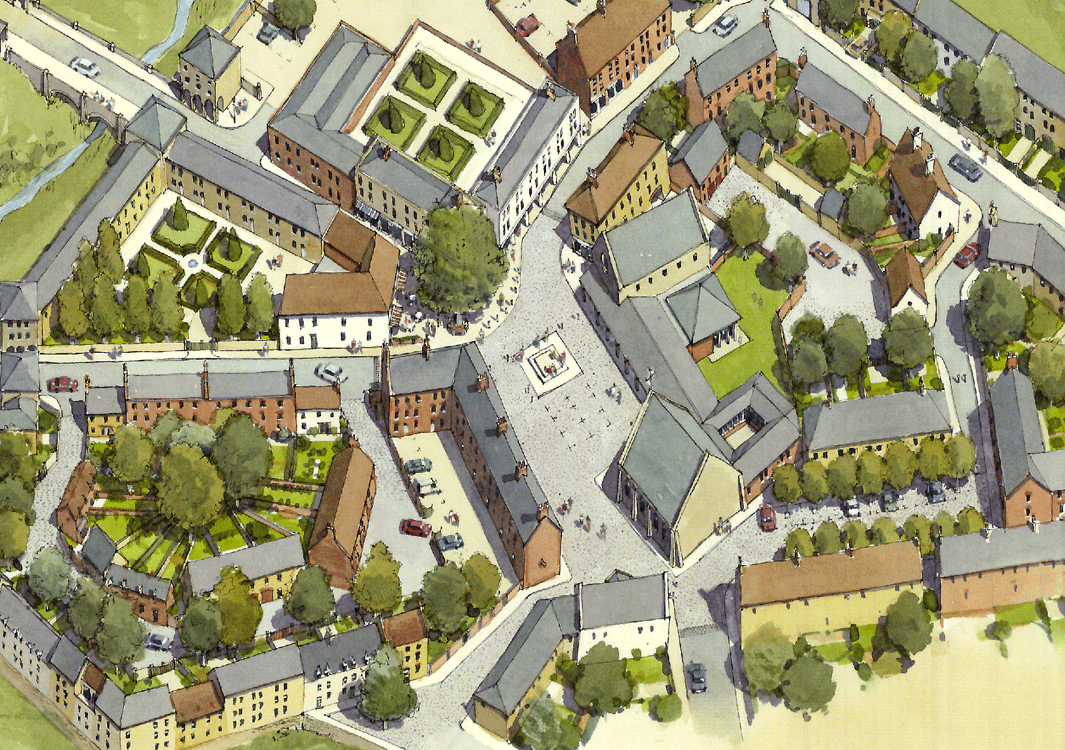
John Simpson Architects - Concept Painting by Ed Venn
Alongside the homes, the result was everything needed for daily life: a market square, shops, cafes, a pub, office and employment spaces, a new church, community centre, primary school, health and fitness centre, veterinary practice, medical centre, pharmacy and a nursery school.
Fairford Leys pioneered the use of a design code - a set of guidelines to regulate the appearance and quality of the buildings. The design principles established at the outset are still in force today and continue to guide property owners considering alterations and extensions so that they meet the original design standards set.
Design code
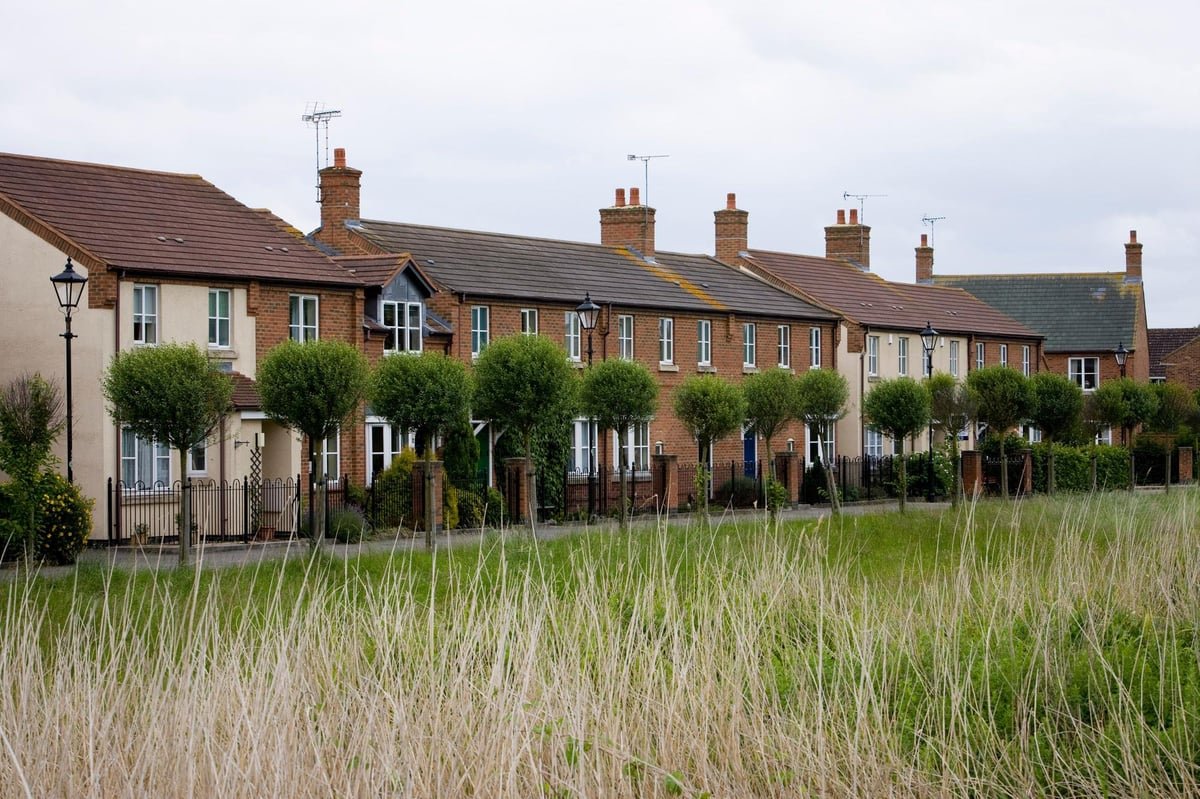
The architecture at Fairford Leys includes features for wildlife and reflects traditional Aylesbury building styles. The centre of the village is partially enclosed by three-and four-storey town houses while the main entrance is marked by two towers that resemble medieval gate towers.
The Ernest Cook Trust’s Director of Land, Property and Commercial Development, Michael Birnie, said developing Fairford Leys was a key milestone in the Trust’s 80-year-history as both an owner and manager of land and a provider of outdoor education.
“Fairford Leys was held up as an example of how to place make and it is used as a reference point even now,” Michael said. “It enabled the Trust to make investments which generated more income so the Trust could deliver more education.
“We have found, over decades of experience, that thoughtful land and property management, with communities front of mind, can help people and land collectively thrive.”
Property and development specialists Knight Frank used the community as an example of positive placemaking in its 2020 report for the Government “Building in Beauty.” Their report found that residents of Fairford Leys were now moving up or down the housing ladder into larger or smaller properties to suit their circumstances, allowing them to stay within the community.
Space for wildlife and nature
In a separate report to assess the cost and value of building high quality developments, Knight Frank analysed Fairford Leys and found that, far from eroding profits as the housebuilders had initially feared, value premiums on homes in the community were around 15% higher.
The Trust’s former Chair of Trustees, Andrew Christie-Miller, admitted that developing Fairford Leys was “hugely controversial” at the time but is now recognised as an example of high-quality place-making.
“The trustees took the decision to develop the land but to do so in the most sympathetic way. It wouldn’t necessarily get us the very best price but would ensure a very sympathetic development that was very much in line with our philosophy.
“There were a lot of objectors…It was difficult. We chose much the best option which was to do a very high calibre development which was achieved and been recognised by many sources with a master plan which was well thought through.”
Keith Gray, the Clerk of Coldharbour Parish Council which covers the Fairford Leys community, said the design principles set by the Ernest Cook Trust and architect John Simpson had set the standard for a high-quality community – but maintaining those standards fell to the parish council.
“The parish council bought into the whole masterplan and design principles from the outset, and we have made it our mission to protect that master plan and stop any changes being made that would damage it – that policy has worked,” he said.
“It is a really lovely place to live, it has got everything anybody needs, and because it was so well designed from the outset people are happy to keep it the way it was always intended to be.”
Keith added that it his son grew up in Fairford Leys and has now bought his own home there.
Mr Gray said other developers planning new communities under the Government’s plans to boost housebuilding could learn lessons from Fairford Leys. “We are always ready to advise on the right way to create communities,” he said. “We think we got it right.”
Further reading
John Simpson Architects - Masterplan and Design Code for Fairford Leys